
The Last Banquet: When Schopenhauer, Nietzsche and La Mettrie Sit Down with the Body


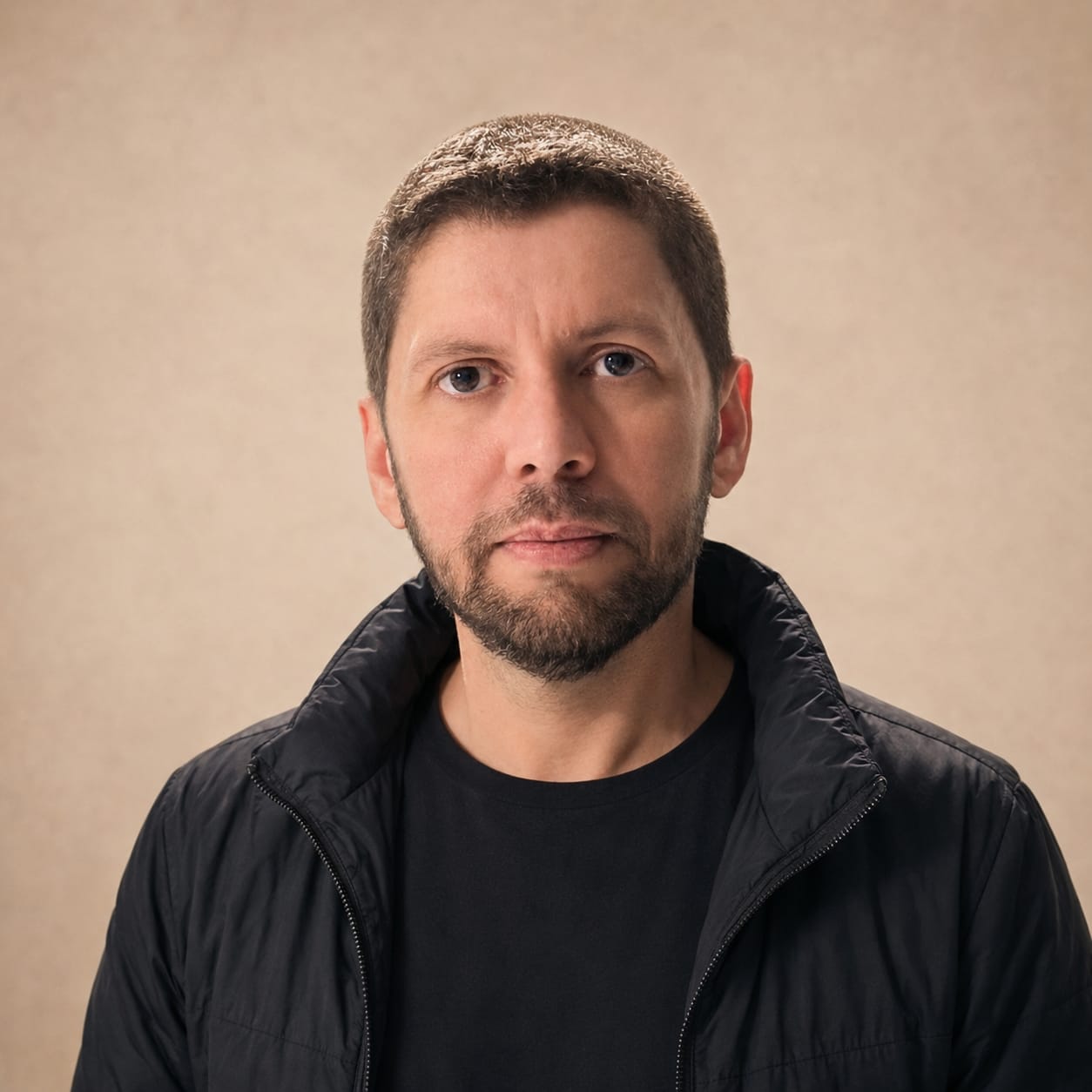
What happens when three philosophers who disagree about suffering, desire, matter and the value of life are invited to share one final meal? Schopenhauer, Nietzsche and La Mettrie: The Last Banquet, by Deivede Eder Ferreira, answers by turning philosophy into drama. In an impossible café suspended between life and eternity, Arthur Schopenhauer, Friedrich Nietzsche and Julien Offray de La Mettrie do not appear as museum pieces. They speak, provoke, drink, hesitate and test their ideas against one another. The result is a philosophical novel in which the body becomes the fourth guest at the table.
The premise is immediately intelligible, but its implications are deep. Schopenhauer describes existence through ceaseless striving and the suffering that follows from it. Nietzsche refuses resignation and asks whether life can be affirmed in its difficulty. La Mettrie, physician and materialist, insists that thinking cannot be separated from the organism that thinks. When these positions meet over food and wine, abstract doctrines acquire temperature, appetite, rhythm and consequence.
This is why the book matters. It does not merely summarize three thinkers. It asks what their philosophies sound like when they must answer one another in the same room—and what each of them can say to readers living in a culture of exhaustion, performance, bodily dissatisfaction and anxious self-optimization. The banquet becomes a laboratory for a question that remains urgent: how should we inhabit a life in which desire both animates and unsettles us?
Philosophy Becomes an Encounter
Philosophical fiction succeeds when ideas do more than decorate a plot. They must generate tension, shape a voice and alter what is possible between characters. The Last Banquet adopts precisely this method. Its café is not a neutral background. It is a threshold: neither the historical Europe in which the philosophers lived nor a conventional afterlife governed by final answers. Death has ended chronology, but it has not ended disagreement.
That suspension creates unusual freedom. Schopenhauer can face Nietzsche without the ordinary distance between predecessor and critic. La Mettrie, from an earlier century, can interrupt both men with the authority of medicine, appetite and material existence. Their conversation is therefore not a reconstruction of an event that occurred. It is an imaginative experiment grounded in recognizable philosophical problems.
In this setting, a pause may matter as much as an argument. A glass raised or refused can reveal an entire ethics. Food is never merely symbolic, because a banquet reminds every speaker that consciousness depends on a body capable of hunger, satiety, illness and pleasure. Philosophy is returned to the conditions from which it often tries to escape.
Why the Banquet Is the Perfect Philosophical Stage
The connection between shared meals and philosophy is ancient. In Plato’s Symposium, a banquet becomes the occasion for competing speeches about love. The form matters: rather than presenting a single impersonal treatise, dialogue preserves voices, temperaments, rivalries and the social circumstances of thought. Ideas emerge through response.
The Last Banquet renews that tradition in a modern existential register. Its subject is not only what the philosophers believe, but what happens when belief is embodied in a person seated across from another person. At a table, no participant can fully control the conversation. A claim is interrupted, challenged or exposed by gesture. The meal moves forward even when agreement does not.
The banquet also joins necessity and culture. We eat because organisms require nourishment, yet meals are shaped by ritual, memory, class, taboo and desire. That double character makes the table an ideal place for La Mettrie’s materialism, Schopenhauer’s account of striving and Nietzsche’s reflections on valuation to collide. The body needs; culture interprets; philosophy decides what that need is supposed to mean.
Schopenhauer: The Will That Never Rests
For Schopenhauer, the visible world is not the whole story. Beneath representation lies will: a blind, restless striving expressed throughout nature and experienced intimately in desire. We do not simply possess isolated wishes. We are organisms in whom wanting repeatedly takes form.
This view gives suffering a structural place. An unsatisfied desire hurts; satisfaction offers only a temporary interval before a new demand appears. Life oscillates between lack and boredom, while individuality can trap us inside the urgency of our own interests. The Stanford Encyclopedia of Philosophy’s account of Schopenhauer shows why his pessimism is more than a gloomy mood: it follows from an entire metaphysics of ceaseless will.
Yet Schopenhauer is not simply an advocate of despair. Art can briefly interrupt practical wanting by allowing contemplation without possession. Compassion can loosen egoism by revealing suffering beyond the boundaries of the isolated self. Ascetic renunciation can go further, refusing to keep feeding the machinery of desire. His thought therefore contains several ways of gaining distance from the will, even if none resembles the cheerful promise of permanent satisfaction.
At the banquet, these ideas become vividly vulnerable. A table offers objects of appetite. Wine can intensify sensation, sociability and forgetfulness. For Schopenhauer, accepting pleasure may look like consenting once more to the cycle that produces frustration. Refusing it may protect philosophical consistency, but it also risks turning wisdom into a retreat from lived experience.
Nietzsche: Can Suffering Be Transformed into Affirmation?
Nietzsche inherits Schopenhauer’s seriousness about suffering but rebels against the ideal of negating the will. The disagreement is not a simple opposition between sadness and happiness. Nietzsche does not promise a painless world. He questions whether suffering must count as an argument against life.
As the Stanford Encyclopedia of Philosophy’s overview of Nietzsche explains, affirmation, self-overcoming and the interpretation of values are central to his project. The will to power is not best reduced to domination over other people. It names, among other things, the activity of encountering resistance, organizing forces and becoming capable of new forms. The important question is not only what happens to us, but what a form of life can make from what happens.
Placed across the table from Schopenhauer, Nietzsche must answer the charge that affirmation romanticizes pain. Placed beside La Mettrie, he must clarify whether vitality is purely physiological or also an art of valuation. His presence keeps the banquet from settling into either resignation or uncomplicated pleasure.
This perspective resonates with readers surrounded by prefabricated ideals of success. A culture of performance tells people to become stronger, faster and more productive, but Nietzschean self-overcoming is not identical to measurable optimization. It can involve the difficult creation of values adequate to one’s singular existence. The novel’s Nietzsche therefore challenges both passive resignation and the modern demand to turn the self into an endlessly improved product.
La Mettrie: The Body Refuses to Remain Silent
Julien Offray de La Mettrie is the least familiar of the three figures for many readers, which makes his role especially productive. Trained as a physician, he defended a radical materialism in the eighteenth century. His best-known work, Man a Machine, is available in a public-domain historical edition from Wellcome Collection. Its provocative thesis is not that human beings are trivial mechanisms, but that mental life cannot be understood independently of bodily organization.
Mood changes with sleep, nutrition, illness, temperature and physiology. Thought is not a visitor temporarily lodged inside inert matter. It is an activity of a living body. For a tradition accustomed to ranking reason above sensation, this claim is destabilizing. La Mettrie gives philosophical dignity to the conditions that abstract systems frequently suppress.
His presence at a banquet is therefore more than a playful choice. He makes the meal epistemologically relevant. Hunger can alter judgment; wine can alter speech; fatigue can alter certainty. Before a philosopher explains the world, a nervous system is already perceiving, reacting and regulating. The body does not arrive after the argument as an example. It helps produce the argument.
La Mettrie also complicates easy accounts of pleasure. Hedonism is often caricatured as impulsive consumption, but bodily pleasure can function as a protest against metaphysical contempt for life. To recognize enjoyment is to refuse the idea that embodiment is merely a prison to be transcended. At the same time, materialism does not guarantee wisdom. If pleasure is reduced to accumulation or sedation, it becomes another form of captivity.
The Body as the Fourth Guest
Although only three philosophers are named in the title, the body is the decisive fourth guest. It appears through appetite, posture, breath, intoxication, discomfort, attraction and mortality. It cannot deliver a speech independent of interpretation, yet it continually modifies what the speakers can claim.
Psychoanalysis makes this dimension especially compelling. The body is never only biological matter, nor is it merely an image governed by conscious choice. It is marked by language, fantasy, symptom and the gaze of others. We may understand a habit intellectually while remaining unable to change it, as the ABRAFP article “When Reason Is Not Enough” explores. Knowledge and transformation do not coincide automatically.
This gap illuminates the banquet. Schopenhauer can know that desire renews suffering and still be a desiring organism. Nietzsche can affirm becoming without escaping vulnerability. La Mettrie can explain the dependence of thought on physiology without reducing a singular life to a diagram. Their systems are powerful, but embodiment prevents any system from closing perfectly around the person who speaks it.
The novel’s café makes that tension visible. A body at a table occupies space, waits for another, and encounters limits. It cannot eat without consuming, speak without pausing or live without moving toward death. These facts are elementary, but philosophy changes when it treats them as conditions of thought rather than embarrassing details.
Three Philosophies, Five Living Conflicts
The novel can be approached through five conflicts that organize its intellectual drama.
First, suffering versus pleasure. Schopenhauer treats suffering as deeply woven into striving; La Mettrie restores pleasure to embodied life; Nietzsche asks whether both pain and joy can become materials of affirmation.
Second, renunciation versus creation. Is freedom achieved by quieting desire, or by transforming the forces that desire sets in motion? The alternatives are not purely theoretical. They appear whenever a person wonders whether to withdraw from a destructive game or invent a different way of participating in life.
Third, mind versus body. La Mettrie attacks the fantasy of a sovereign mind detached from physiology. The others cannot simply ignore him, because their claims are voiced by embodied characters. The conflict remains current wherever emotion is treated as an obstacle to rationality or bodily symptoms are dismissed because no straightforward explanation has been found.
Fourth, truth versus perspective. Each philosopher organizes experience through a different vocabulary. Their disagreement invites readers to consider whether a philosophy reveals reality, creates an interpretation or does both at once. The dialogue form prevents a final narrator from dissolving difference too quickly.
Fifth, death versus meaning. The café exists between life and eternity, turning death into the condition for renewed speech. If mortality does not end the conversation, it changes its stakes. Meaning is no longer postponed indefinitely. Every philosophy must show what it makes possible in the face of finitude.
Why This Impossible Conversation Matters Now
The twenty-first century has developed its own uneasy combination of pessimism, affirmation and materialism. Ecological anxiety, political instability and burnout make Schopenhauer’s account of suffering recognizable. Motivational culture borrows the language of overcoming while often stripping it of Nietzsche’s complexity. Neuroscience, psychiatry and quantified health return us to La Mettrie’s insistence that thought depends on bodily conditions.
At the same time, digital life encourages a peculiar disembodiment. People meet through images and text while their nervous systems remain exposed to sleeplessness, comparison and continuous stimulation. Desire is tracked, predicted and monetized. The promise of unlimited choice coexists with a widespread feeling of powerlessness.
A philosophical banquet interrupts this acceleration. It requires sustained attention to incompatible positions. It invites the reader to remain with a question long enough for its emotional and bodily dimensions to emerge. Instead of providing a formula for happiness, it stages the conflict from which a more honest orientation may develop.
The book is especially relevant because it refuses the separation between intellectual history and ordinary life. Pessimism matters when someone wakes without desire. Materialism matters when illness changes personality. Affirmation matters when suffering cannot be erased but life still demands a response. Philosophy begins to breathe when concepts are returned to such situations.
How to Read Philosophical Fiction Well
The Last Banquet should not be read as a substitute for the philosophers’ original works. Fiction condenses, selects and interprets. Its responsibility is not to reproduce every nuance of a system, but to create an encounter faithful enough to illuminate genuine tensions.
A useful reading practice has three movements. First, listen to each character before deciding who is right. Second, identify the existential problem beneath the explicit argument: fear of dependence, resentment of suffering, distrust of pleasure or refusal of death. Third, compare the fictional voice with a reliable primary or scholarly source. Readers who want to know more about the creator of the dialogue can also consult ABRAFP’s profile of Deivede Eder Ferreira.
The ideal outcome is not mastery of three doctrines after one sitting. It is a sharpened question. Which desires merely repeat themselves? When does renunciation liberate, and when does it diminish life? Can pleasure educate attention? What does a philosophy ask the body to sacrifice? A novel earns its philosophical character when the reader leaves carrying questions of this kind.
A Discreet Invitation to the Table
With 252 pages, Schopenhauer, Nietzsche and La Mettrie: The Last Banquet has room to let its confrontation develop beyond a clever premise. Its lyrical, reflective style turns theoretical disagreement into atmosphere and existential pressure. Every glass, silence and interruption helps reveal what each philosophy can—and cannot—say about a living being.
The work will appeal to readers of philosophical fiction, intellectual history and psychoanalytic reflection, as well as to those meeting La Mettrie, Schopenhauer or Nietzsche for the first time. Its central invitation is modest but demanding: sit at the table without rushing to choose a winner. Listen for the idea that challenges your habits most directly.
Perhaps the final banquet does not resolve the conflict between reason and desire. Perhaps its value lies elsewhere: in showing that thought becomes more truthful when it remembers the body that sustains it, the suffering it seeks to interpret and the pleasure through which life sometimes answers for itself.
Frequently Asked Questions
What is Schopenhauer, Nietzsche and La Mettrie: The Last Banquet about?
It is a philosophical novel by Deivede Eder Ferreira in which Schopenhauer, Nietzsche and La Mettrie meet in a café suspended between life and eternity. Their final meal becomes a dramatic debate about suffering, will, pleasure, materialism, the body and the possibility of affirming life.
Do I need to know philosophy before reading the book?
No. The novel presents philosophical differences through character, dialogue and conflict, allowing readers to grasp the central questions without prior academic study. Familiarity with the thinkers can add layers, but it is not a requirement.
Is the meeting historically real?
No. It is a work of philosophical fiction. The imagined encounter brings thinkers from different periods together in order to explore authentic tensions among their ideas. It should be read as a literary interpretation, not as a historical transcript.
Why is La Mettrie important to the story?
La Mettrie introduces a radical materialist and medical perspective. He challenges any attempt to separate thought from bodily organization and gives appetite, physiology and pleasure a central place in the debate.
Where can I find the book?
The 252-page e-book is available on Google Play Books. Availability and price may vary by country.







Comentários